What Is Protandim? A Clear Look at What's in It and How It Works

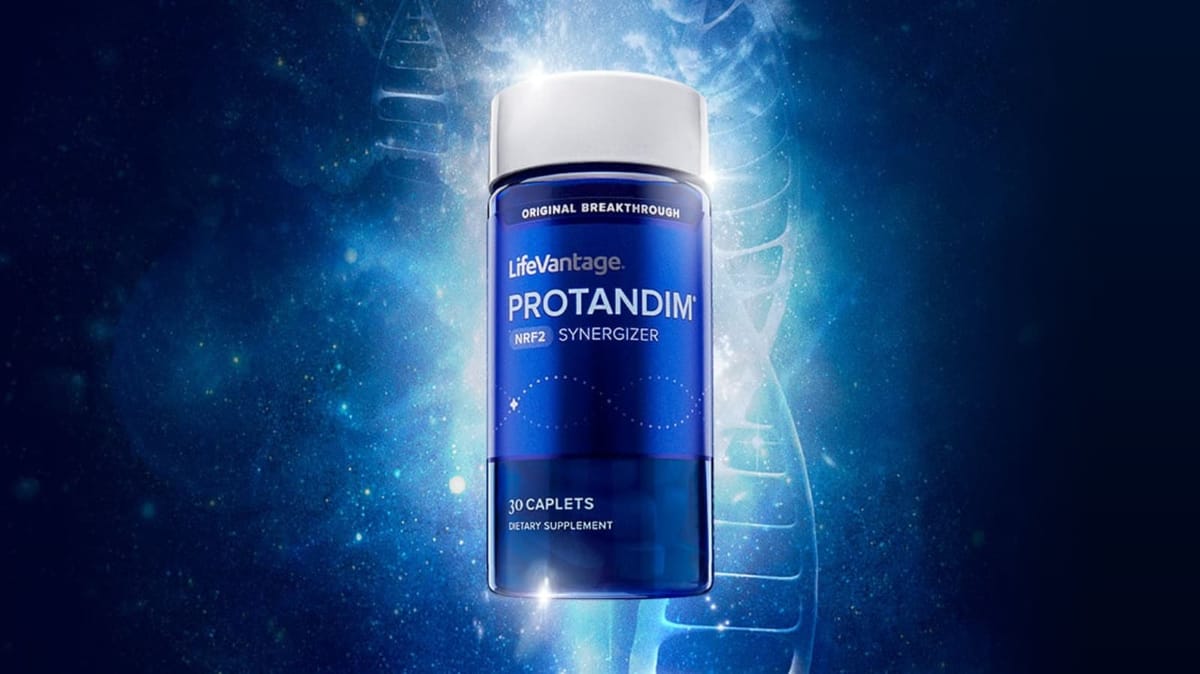
If you've read my post about the one change that gave me my energy back, you already know that Protandim is the product that changed things for my family. This post goes deeper into what it actually is, what's in it, and why it's different from the supplements most of us have tried before.
I want to be clear upfront that I'm a LifeVantage distributor and can earn a commission if you buy through my link. I'm also someone who takes this product every single day and has done for nearly two years, so take that as you will.
Oxidation and How It Affects Your Body
You've seen oxidation before, even if you didn't call it that. It's the rust forming on iron left out in the rain. It's the browning of a sliced apple or avocado sitting on the bench. It's what happens when oxygen reacts with another substance and slowly breaks it down.
The same process happens inside your body, every single day.
As your cells convert food into energy, they produce highly reactive byproducts called free radicals. These unstable molecules bounce around inside your cells looking for something to react with, and they're not fussy. They'll bond with your DNA, your cell membranes, the proteins your cells depend on to function. Each reaction causes a small amount of damage. In a young, healthy body that damage gets repaired quickly. But over time, and especially as we age, the damage accumulates faster than it can be fixed.
This is called oxidative stress, and it's now understood to be one of the central mechanisms behind ageing itself. The theory isn't new. The free radical theory of ageing, first proposed in the 1950s, suggests that the gradual accumulation of oxidative damage is a primary driver of why our cells slow down, deteriorate, and eventually fail. It's not the only explanation for ageing, but the evidence connecting oxidative stress to the process is substantial.
Beyond ageing, oxidative stress has links to cardiovascular disease, type 2 diabetes, neurodegeneration, inflammatory conditions, and chronic fatigue, among many others. It doesn't cause all of these directly, but it creates the cellular conditions in which they develop and worsen. I go much deeper on the science in the Nrf2 post, but for now the important thing to understand is that keeping oxidative stress under control is genuinely foundational to long-term health.
The factors that accelerate it are largely modern life staples. Poor diet, chronic stress, environmental toxins, alcohol, inadequate sleep, and even heavy exercise all increase free radical production. Breathing itself generates them. This isn't a reason to panic, our body is working to eliminate these free radicals, but it's a reason to understand what your body needs to keep the balance in check.
How Protandim Helps With Oxidation
The obvious answer to oxidative stress is antioxidants. And most of us have tried them in one form or another, whether we knew it or not.
Blueberries are famously high in antioxidants. So is green tea. Red wine gets credited for its resveratrol. Vitamin C, vitamin E, beta-carotene, CoQ10, and dozens of other supplements are marketed on the strength of their antioxidant properties. I've tried several of them over the years, hoping something would shift the chronic exhaustion I'd lived with for decades. Some helped a little. None helped over time. Most did nothing.
The fundamental limitation of all of these, food-based or supplement-based, is that they work one-on-one. One antioxidant molecule neutralises one free radical, and then it's gone. To make a meaningful dent in oxidative stress using consumed antioxidants alone, you'd need to be eating or supplementing at a scale that isn't realistic, and even then, many of these compounds have poor bioavailability, meaning your digestive system can't absorb and use most of what you actually swallow.
Your body's own antioxidant enzymes are a completely different proposition. They don't work one-on-one. They work like a catalyst, meaning a single enzyme molecule can neutralise millions of free radicals in sequence without being used up. They are orders of magnitude more powerful than anything you can consume in a capsule or a bowl of berries.
The question is whether you can switch their production on, especially since as you age that production naturally starts to decline.
This is exactly what Protandim is designed to do. Rather than flooding your system with antioxidants from outside, it signals your body to ramp up production of its own. The mechanism behind this is called NRF2 activation, and I'll cover it fully in the next post. For now the key point is this: Protandim doesn't fight oxidation for you. It wakes up the system inside you that was always designed to fight it.
What's Actually in It
Protandim Nrf2 Synergizer contains five plant-based ingredients, each studied independently for their effects on oxidative stress and cellular health. Together they appear to work synergistically, meaning the combined effect is greater than you'd expect from any one of them alone.
Milk Thistle (Silybum marianum) has been used in traditional medicine for over two thousand years, primarily for liver support. Its active compound, silymarin, has been studied extensively for antioxidant and anti-inflammatory properties, with solid research supporting its ability to protect liver cells from free radical damage.
Bacopa monnieri comes from Ayurvedic (Hindu) medicine and has a long history of use for cognitive function and stress reduction. Research has shown antioxidant properties and potential to protect neurons from oxidative damage, making it one of the more interesting ingredients from a brain health perspective.
Ashwagandha (Withania somnifera) is probably the most widely known of the five right now. It's an adaptogen, helping the body manage stress responses, and has been studied for its effects on inflammation, cortisol levels, and physical performance. The research base on ashwagandha is more extensive than most herbal supplements and generally positive.
Green Tea Extract (Camellia sinensis) contains EGCG, one of the most studied antioxidant compounds in nutritional science. A vast body of research has examined the relationship between green tea consumption and health outcomes ranging from cardiovascular health to reduced cancer risk. The extract concentrates these compounds significantly.
Turmeric (Curcuma longa) contains curcumin, which has an enormous research literature behind it and well-established anti-inflammatory properties. The challenge with curcumin taken on its own is that it's poorly bioavailable in most forms. In combination with the other ingredients in Protandim, bioavailability appears to be meaningfully improved.
Why Is This Combination Different?
Each of these ingredients has individual merit. Herbalists and naturopaths have used versions of all of them for centuries, and you could buy each one separately from any health food store. What distinguishes Protandim is that this specific combination at these specific ratios appears to activate the Nrf2 pathway in a way that individual ingredients don't achieve as effectively on their own.
A peer-reviewed study published in Free Radical Biology and Medicine found that Protandim reduced oxidative stress biomarkers in human subjects by an average of 40% over 30 days. That result was measured through blood tests rather than subjective reporting. The lead researcher, Dr Joe McCord, is one of the discoverers of superoxide dismutase, an enzyme central to how your body handles oxidative stress. His involvement gives the research genuine credibility within the field.
What Protandim appears to do is reduce the burden of oxidative stress on your cells, allowing those cells to function better and carry out their own repair work more effectively. Whether that translates into specific changes a given person notices, more energy, less inflammation, better immunity, will vary between individuals.
What We Take and What We've Noticed
My family takes the Protandim Nrf2 Synergizer daily. Both my wife and I take it, and so do our two children.
My own experience is documented in detail in the previous post so I won't repeat it all here. The short version is that the chronic exhaustion I'd lived with for 30 to 40 years largely resolved within a few weeks and has stayed resolved for nearly two years. My posture improved because I suddenly had enough energy to hold myself upright without effort. We both stopped reaching for anti-inflammatories we'd been taking at least weekly. Our family's general immunity changed noticeably, with illnesses either not landing at all or arriving greatly reduced.
Can I prove all of those changes are from Protandim? Not with certainty. What I can say is that nothing else changed significantly when those improvements appeared, and two days without the product last October left me feeling genuinely awful in ways that felt very familiar. Make of that what you will.
What It Costs and Whether It's Worth It
Protandim is not cheap. At current pricing you're looking at roughly $50 to $60 USD per month for one person, more for a family. In Australian dollars that's a meaningful ongoing expense, and I'll be honest that there have been months where keeping it in the budget has required real prioritisation.
Whether it's worth the cost depends entirely on what you experience. A friend of mine used it for a few months and couldn't meaningfully attribute any change in his life. For me it has been worth every dollar, because the alternative is a life I don't want to go back to. For someone who tries it and notices modest or no change, that's a harder calculation.
LifeVantage offers a return policy if you're not satisfied, and their customer option lets you buy without any distributor commitment. That's probably the right starting point for most people if they are interested in trying the product.
The Honest Summary
Protandim is a well-researched supplement with a genuine scientific mechanism, peer-reviewed studies supporting its effects on oxidative stress, and a track record of meaningful results for many people who take it. It is not a miracle cure, not right for everyone, and not cheap.
If you're dealing with unexplained fatigue, chronic low-grade inflammation, or the general sense that your body isn't recovering the way it used to, it's worth understanding how it works and whether it might be relevant to your situation. Perhaps exploring the Facebook Group with other people's experiences (positive mainly, but also negative) may help. This is not to convince anybody, only to provide you with what you need to make your own informed choice.
The next post goes deep on the Nrf2 pathway itself, which is the science behind why all of this actually works.